
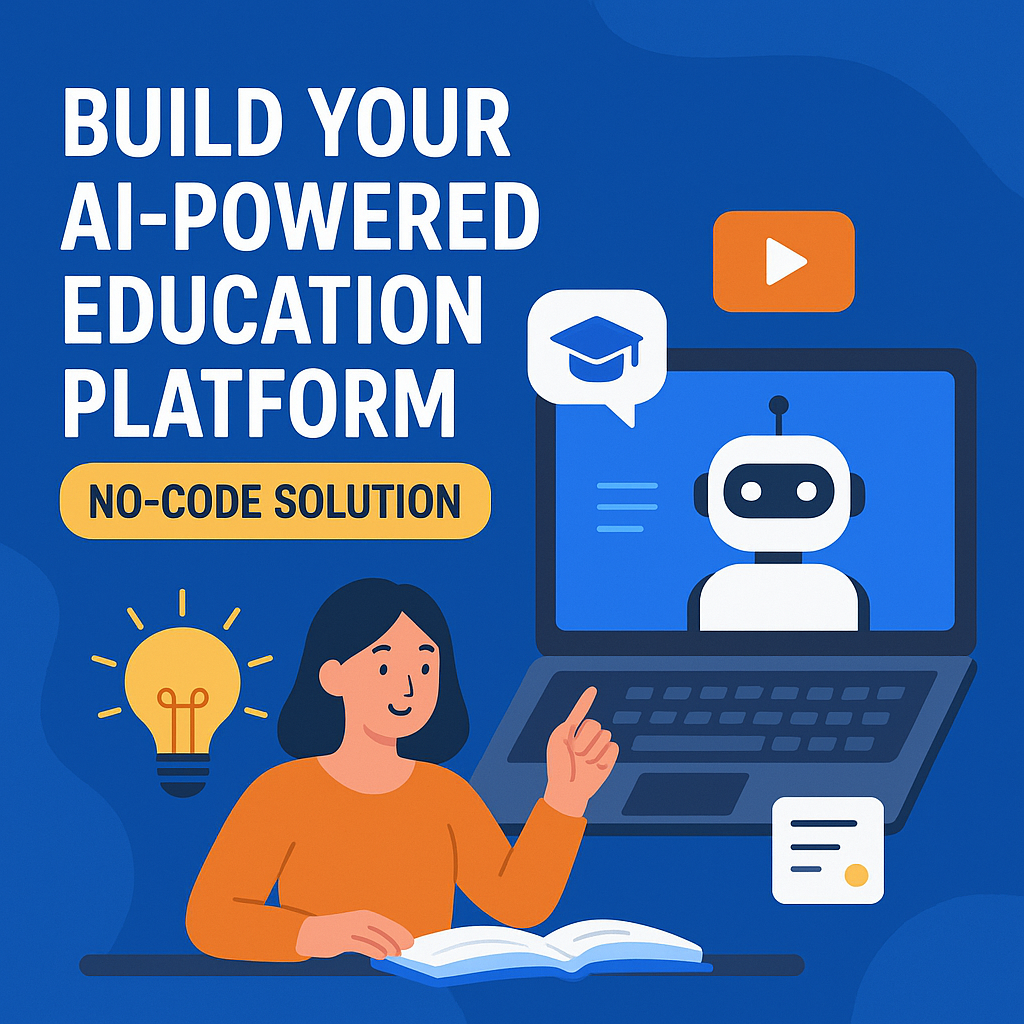
Build Your AI-Powered Education Platform: No-Code Solution
No-Code, Fully Agentic: Create Your Own AI-Powered Education Platform Instantly
In the rapidly evolving world of educational technology, Artificial Intelligence (AI) is a game-changer. Now, more than ever, educators and entrepreneurs can leverage AI to enhance learning experiences without needing any coding skills. Discover how you can create your own AI-powered education platform instantly, harnessing the power of no-code solutions.
Understanding AI in Education
AI has transformed numerous aspects of education, offering personalized learning paths, automating administrative tasks, and providing insightful analytics. An AI-powered education platform can adapt to individual student’s learning speeds, recommend resources, and even assist in grading, making education more effective and inclusive.

Benefits of AI in Educational Platforms
- Personalization: Tailors learning experiences according to individual needs.
- Efficiency: Automates routine tasks like attendance and grading.
- Accessibility: Provides equitable learning opportunities.
What is a No-Code Platform?
No-code platforms are tools that allow you to build software without writing a single line of code. These platforms provide visual interfaces where components can be pieced together like a puzzle to build functional applications. This revolutionary approach democratizes technology creation, making it accessible to everyone.
Advantages of No-Code Solutions
- Speed of Deployment: Launch applications in a fraction of the time.
- Cost Efficiency: Reduce development costs with in-built features.
- Ease of Use: Intuitive design and drag-and-drop interfaces.
Creating Your AI-Powered Education Platform
Here’s a step-by-step guide to creating your education platform using a no-code, AI-powered solution:

Step 1: Define Your Goals
Consider what you aim to achieve with your platform. Are you focusing on K-12, higher education, or lifelong learning? Do you want to address specific subjects or offer a broad curriculum?
Step 2: Choose the Right No-Code Platform
Select a no-code platform that supports AI integrations and offers the features you need. Popular options include Bubble, Adalo, or Zapier for AI functionalities.
Step 3: Design Your User Experience
Map out the user journey on your platform. Think about how users will interact with the AI elements, such as receiving personalized learning recommendations or accessing AI-generated content.
Step 4: Integrate AI Tools
Incorporate AI tools that can provide analytics, personalized learning paths, or automated feedback. Many no-code platforms offer AI plugins or extensions that are easy to integrate.
Step 5: Test and Launch
Before going live, test your platform with real users to gather feedback and make necessary adjustments. Once satisfied, launch your platform publicly.
Step 6: Collect Feedback and Iterate
After launch, continuous improvement is key. Collect user feedback, monitor engagement levels, and use this data to refine and enhance your platform.
Challenges to Anticipate
While creating an AI-powered education platform is now easier than ever, challenges remain:
- Data Privacy: Ensure that your platform complies with data protection regulations.
- Technology Limitations: While no-code tools are powerful, they have limitations. Be aware of these to manage expectations.
- Change Management: Encourage adoption and manage resistance among users new to AI technology.
Conclusion
The era of no-code, AI-powered education platforms is here, offering unprecedented opportunities for educators and learners. By understanding the capabilities of AI and leveraging the simplicity of no-code platforms, virtually anyone can create a personalized, efficient, and scalable educational environment. Start building your own AI-driven learning community today and redefine what’s possible in education.
Remember to adapt the steps based on the specific needs of your educational objectives and the capabilities of your chosen no-code platform. With the right approach, your AI-powered education platform can truly transform learning experiences.