
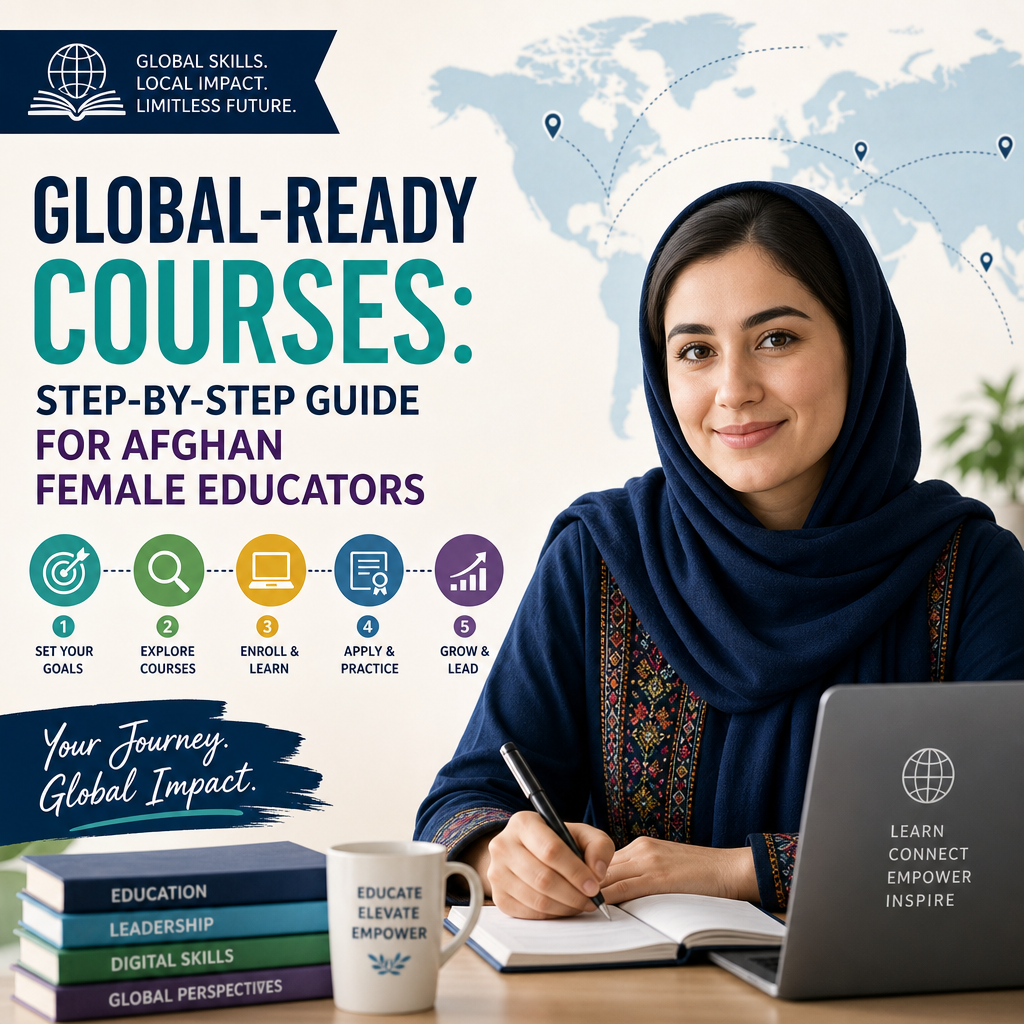
Global-Ready Courses: Step-by-Step Guide for Afghan Female Educators
Creating Global-Ready Courses: A Step-by-Step Guide for Afghan Female Educators
Afghan female educators are shaping the future through resilience, creativity, and commitment. In a changing world, one of the most powerful ways to expand that impact is by creating global-ready courses that can reach learners beyond local communities.
A global-ready course is clear, inclusive, flexible, and designed for students from different backgrounds and levels of access. For Afghan women educators, this approach can open doors to international teaching opportunities, online learning communities, and wider professional recognition.

Why Global-Ready Courses Matter
A strong course can do more than share knowledge. It can build confidence, create income, and amplify a teacher’s voice.
For Afghan female educators, global-ready courses can:

- Reach students across countries and time zones
- Support remote and blended learning
- Present local expertise to a worldwide audience
- Build sustainable teaching careers online
- Encourage cultural exchange and understanding
The goal is not to make every course look the same. The goal is to make it accessible, practical, and meaningful for learners anywhere.
Step 1: Choose a Topic You Know Deeply
The best courses begin with expertise. Start with a subject you already teach well or a skill you have developed through experience.
Good course topics may include:
- English language learning
- Early childhood education
- Literacy and reading support
- Classroom management
- Digital skills for beginners
- Women’s leadership and empowerment
- Afghan history, culture, or literature
- Test preparation and study skills
Choose a topic that is both useful and specific. A focused course is easier to build and easier for students to complete.
Step 2: Understand Your Learners
Global-ready courses work best when they are designed for real people. Think about who your learners are.
Ask yourself:
Who will take this course?
- Students in Afghanistan?
- Afghan women living abroad?
- International learners interested in your subject?
- Teachers looking for practical methods?
What do they need?
- Simple explanations
- Flexible access on mobile devices
- Low-bandwidth materials
- Real-life examples
- Downloadable resources
When you understand your audience, you can create lessons that feel relevant and welcoming.
Step 3: Set Clear Learning Outcomes
Every good course needs a clear purpose. Learning outcomes tell students what they will be able to do by the end.
For example:
- Understand basic classroom strategies
- Write a simple essay in English
- Use digital tools for lesson planning
- Apply reading comprehension techniques
Keep outcomes short and measurable. If learners can see progress, they are more likely to stay engaged.
Step 4: Organize the Course into Small Modules
A global-ready course should be easy to follow. Break the content into short modules or units.
A simple structure might look like this:
- Introduction and course goals
- Core concept or lesson one
- Practice activity
- Lesson two
- Review and reflection
- Final assessment or project
Short modules help learners study at their own pace. They also work better for students with limited internet access or busy schedules.
Step 5: Use Clear and Simple Language
Language is one of the most important parts of course design. Use plain, direct words. Avoid long sentences and complicated explanations.
Helpful tips:
- Define new terms
- Repeat key ideas
- Use examples from daily life
- Keep instructions short
- Speak to learners in a friendly tone
If your course will be used internationally, simple English can make it more inclusive. If possible, consider adding subtitles, transcripts, or bilingual support materials.
Step 6: Include Visuals and Practical Activities
People learn in different ways. Some learners understand best through reading, while others need images, examples, or hands-on practice.
You can strengthen your course with:
- Slides with simple graphics
- Short videos
- Infographics
- Worksheets
- Reflection questions
- Real-world case studies
Practical activities are especially important. They help students apply what they learn instead of just memorizing information.
Step 7: Make the Course Accessible
Accessibility is essential for global audiences. Many learners may have limited devices, slow internet, or different learning needs.
To improve accessibility:
- Keep video files small when possible
- Offer text versions of lessons
- Use readable fonts and strong contrast
- Avoid overcrowded slides
- Make downloads available offline
- Add captions to videos
An accessible course shows respect for every learner and increases the chance that your course will be completed.
Step 8: Add Cultural Awareness
A course for a global audience should reflect care and respect for different cultures. This does not mean removing your identity. It means presenting your ideas in a way that welcomes others.
You can do this by:
- Explaining local examples clearly
- Avoiding slang that may confuse international learners
- Showing how your topic connects to global issues
- Including respectful comparisons across cultures
Afghan female educators have a powerful perspective to share. Cultural authenticity can become one of the strongest parts of the course.
Step 9: Test and Improve
Before launching your course, ask a few people to review it. They may be colleagues, students, or trusted friends.
Ask them to check:
- Is the course easy to understand?
- Are the instructions clear?
- Do the activities make sense?
- Is the pacing comfortable?
- Are there any technical problems?
Feedback helps you improve the final version. Even small changes can make a big difference in learner experience.
Step 10: Share Your Course with Confidence
Once your course is ready, present it professionally. Create a short description that explains what learners will gain. Use a simple title, a clear outline, and a confident introduction.
You can share your course through:
- Online learning platforms
- Social media
- Educational groups
- Professional networks
- Community organizations
Remember, your voice matters. The knowledge you bring is valuable, and your course can inspire learners far beyond your immediate community.
Final Thoughts
Creating global-ready courses is not only about technology. It is about clarity, inclusion, and purpose. For Afghan female educators, it is a way to teach with confidence, reach new audiences, and build a stronger professional future.
Start small. Focus on one subject, one audience, and one clear learning goal. With each course you create, you will gain more skill, more visibility, and more impact.