
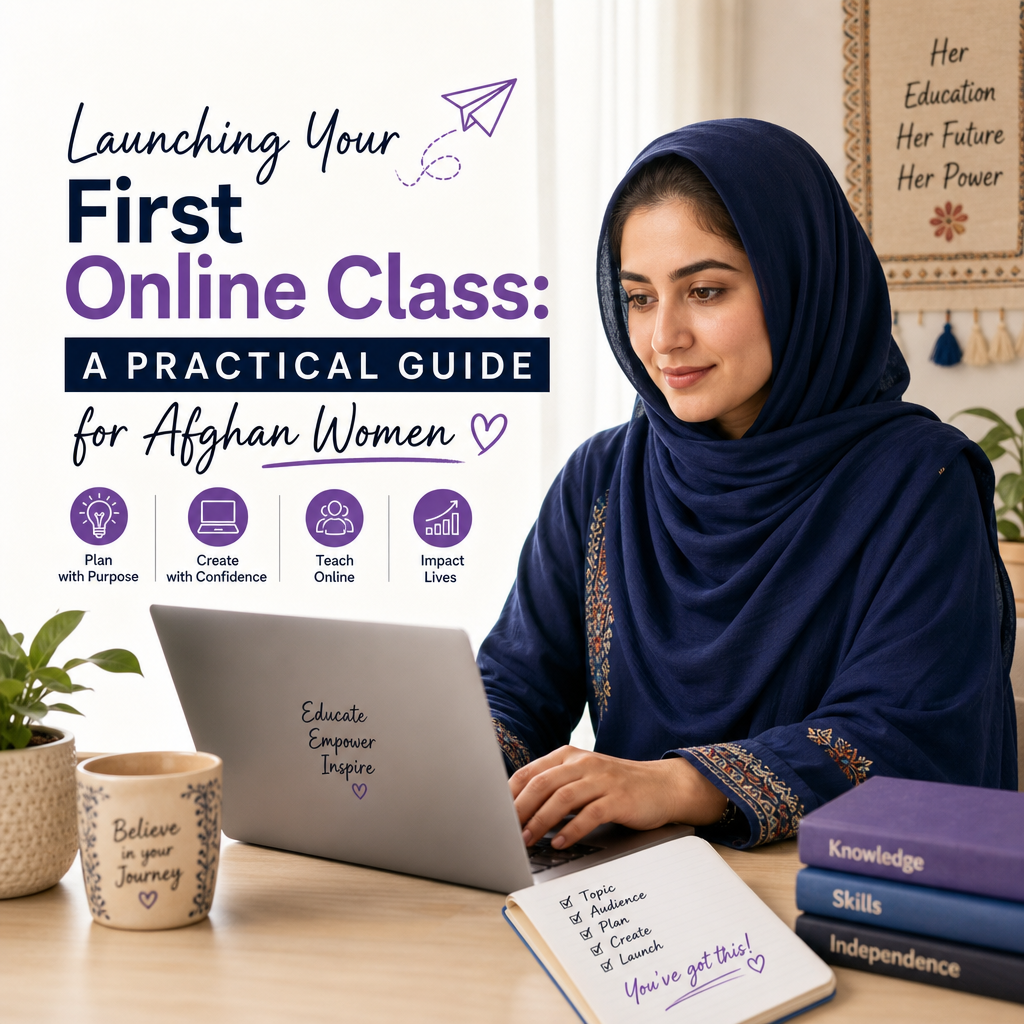
Launching Your First Online Class: A Practical Guide for Afghan Women
Launching Your First Online Class: A Practical Guide for Afghan Women
Starting an online class can feel exciting and overwhelming at the same time. For many Afghan women, it may also feel like a powerful step toward independence, learning, and community. The good news is that you do not need a large budget or advanced technical skills to begin. With a clear plan, a simple structure, and the right tools, launching your first online class can become a realistic and rewarding goal.
This guide will walk you through the basics of planning, preparing, and promoting your class in a practical way.

Why Online Teaching Matters
Online classes create access to education for women who may not be able to attend in person because of distance, safety concerns, family responsibilities, or cost. A virtual class can help you share knowledge in subjects like:
- Language learning
- Sewing or handicrafts
- Basic literacy
- Computer skills
- Quran reading and Islamic studies
- Business and entrepreneurship
- Health and wellness
Teaching online also gives you flexibility. You can teach from home, set your own schedule, and reach students from different cities or even different countries.

Choose a Simple and Clear Topic
When you are just getting started, do not try to teach too many things at once. Choose one topic that you know well and that people may want to learn. A focused topic will make it easier to plan lessons and attract students.
Ask yourself:
- What skill or subject do I know best?
- What problem can I help solve?
- Who is my ideal student?
- Can I teach this topic in 4 to 6 lessons?
For example, instead of “English,” you could offer “English for Beginner Girls” or “Basic Conversation Skills for Women.” A clear title helps students understand exactly what they will learn.
Decide How Your Class Will Work
Before you start teaching, think about the format of your class. Keep it simple.
Live or Recorded?
You can teach in two main ways:
- Live classes: Students join at a set time using Zoom, Google Meet, or WhatsApp video calls.
- Recorded lessons: You record videos or audio messages and share them with students later.
If internet access is unstable for your students, recorded lessons may be easier. If your class depends on interaction, live sessions may work better.
Short or Long Sessions?
For a first class, short lessons are usually best. Try:
- 30 to 45 minutes for live sessions
- 10 to 20 minutes for recorded lessons
Shorter sessions keep students focused and make it easier for you to prepare.
Prepare Your Lessons
A good online class does not need to be complicated. What matters most is structure. Each lesson should have a beginning, middle, and end.
A simple lesson plan can include:
- Welcome and introduction
- Main topic explanation
- Example or demonstration
- Practice activity
- Questions and summary
Write down your lesson points before class. Use simple language and avoid too much information in one session. If possible, prepare handouts, voice notes, or slides to help students remember key ideas.
Set Up Your Basic Tools
You do not need expensive equipment to begin. Start with what you have and improve slowly.
Helpful tools for beginners:
- A smartphone or laptop
- Stable internet connection
- Quiet space for teaching
- Headphones with a microphone, if available
- Zoom, Google Meet, WhatsApp, Telegram, or Facebook groups
- Notebooks, slides, or simple images for teaching
Good lighting and a clean background can also make your class look more professional. If your internet is weak, test the connection before class and keep a backup option ready, such as audio-only teaching or recorded notes.
Create a Safe and Comfortable Learning Space
Many students, especially women and girls, need a respectful and supportive environment to feel comfortable participating. Make your class welcoming from the start.
You can do this by:
- Setting clear rules for behavior
- Encouraging respectful language
- Allowing students to ask questions without fear
- Protecting privacy when needed
- Avoiding unnecessary pressure or judgment
If your class is for women only, say so clearly in your invitation and class description. That can help students feel safer and more confident joining.
Promote Your Class
Once your class is ready, tell people about it. You do not need a large marketing campaign. Start with your own network.
Ways to share your class:
- Post in women’s groups on WhatsApp or Facebook
- Tell family, friends, and neighbors
- Ask previous students to recommend it
- Share a short message with the class title, schedule, and who it is for
- Use voice notes if typing is difficult for your audience
Your message should be simple. For example:
Online English class for beginner Afghan women.
Starts Monday at 5 PM.
Join to learn basic conversation, vocabulary, and simple grammar.
Clear and honest details help people decide quickly.
Keep Improving After You Start
Your first class does not need to be perfect. The most important thing is to begin. After each session, ask yourself:
- What went well?
- What was confusing for students?
- Did the lesson feel too long or too short?
- What can I improve next time?
You can also ask students for feedback. Their answers will help you build a stronger class over time. With each lesson, you will become more confident and more organized.
Final Thoughts
Launching your first online class is a meaningful step that can open doors for you and for your students. For Afghan women, it is more than teaching—it is a way to share knowledge, build confidence, and create opportunity from home. Start small, stay consistent, and focus on helping others learn. One class can be the beginning of something much bigger.