

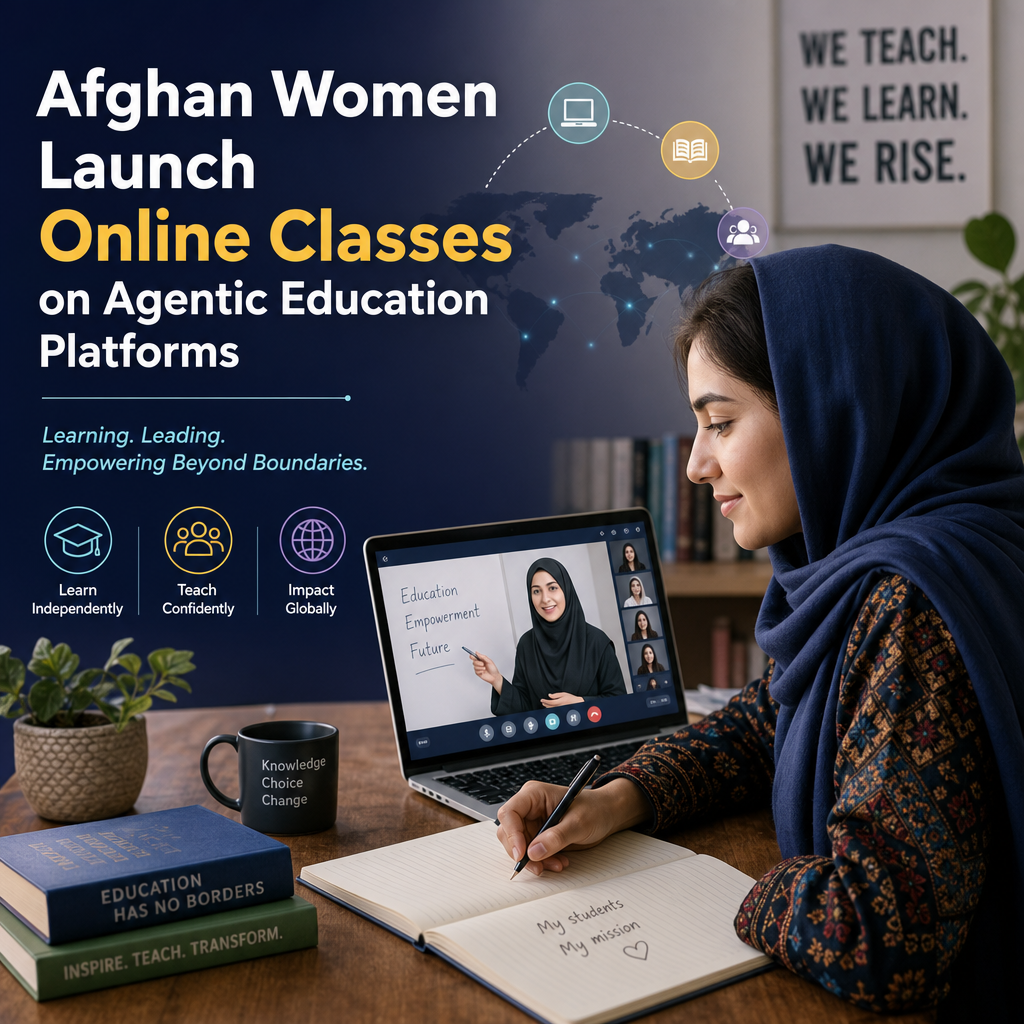
Afghan Women Launch Online Classes on Agentic Education Platforms
How Afghan Women Are Launching Online Classes Using Agentic Education Platforms
Afghan women are building new paths to education, income, and independence through digital tools. In a country where access to classrooms can be limited by distance, safety, and social restrictions, online learning has become more than a convenience. It has become a lifeline.
One of the most promising developments is the rise of agentic education platforms. These systems do more than host lessons. They help educators plan, manage, and personalize learning with smart automation and AI support. For Afghan women, that means they can launch online classes faster, reach more students, and focus on teaching instead of getting lost in technical work.

A New Way to Teach from Home
Many Afghan women have turned to online education because it allows them to teach without leaving home. This is especially important for those who face mobility barriers or need flexible schedules because of family responsibilities.
With an agentic education platform, a woman can:

- create a class page without coding
- upload videos, notes, and quizzes
- schedule lessons automatically
- track student progress
- send reminders and updates
- offer personalized support at scale
This kind of platform acts like a digital assistant. It reduces the burden of handling every administrative task manually. That gives teachers more time to prepare lessons and interact with students.
Why Agentic Education Platforms Matter
Traditional online teaching tools often require a lot of setup. Teachers may need to learn multiple apps, manage payments separately, and monitor student activity on their own. Agentic education platforms simplify that process.
They are especially useful for Afghan women who may not have access to large institutions or technical teams. These platforms can help them build a teaching business from scratch with very little support.
Key benefits include:
-
Ease of use
Teachers can create and manage classes with simple dashboards. -
Automation
Enrollment, reminders, grading, and scheduling can run in the background. -
Personalization
AI tools can adapt lessons to different skill levels and learning speeds. -
Scalability
A single teacher can reach dozens or even hundreds of students. -
Flexibility
Classes can be recorded, live, or blended depending on student needs.
For Afghan women, these features can remove barriers that would otherwise make online teaching feel overwhelming.
Teaching Skills That Matter Most
The subjects Afghan women are teaching online are often practical and community-focused. Many are offering classes in areas that help learners improve daily life or prepare for work.
Common online class topics include:
- English language
- basic computer literacy
- Quran recitation and religious studies
- math and science tutoring
- sewing and handicrafts
- business skills and entrepreneurship
- literacy and exam preparation
Some women also teach younger children, especially families looking for safe, home-based education options. Others focus on adult learners who want to improve job prospects or start small businesses.
Because the classes are online, teachers can connect with students across cities, villages, and even other countries. This wider reach opens up new opportunities for both income and impact.
How Agentic Tools Support Small Education Businesses
Launching a class is only the first step. Running it well is where agentic platforms make a major difference.
For example, a platform might help a teacher:
- generate lesson outlines
- suggest activities based on student level
- translate content into local languages
- organize attendance records
- identify students who are falling behind
- recommend the next lesson based on progress
These tools help women run a more professional education service. Instead of spending hours on repetitive tasks, they can spend that time improving the learning experience.
That is especially valuable for first-time entrepreneurs. Many Afghan women are not just teachers; they are also becoming business owners. An agentic platform gives them structure and confidence as they grow.
Overcoming Barriers with Technology
Of course, challenges remain. Internet access can be unreliable. Devices may be shared among family members. Power outages can interrupt lessons. And in some regions, digital literacy is still limited.
Even so, women are finding creative ways to adapt. Some use low-bandwidth video tools. Others rely on voice notes, PDFs, and messaging apps to support students who cannot attend live sessions. Agentic platforms can help by making content easier to organize and deliver across different formats.
Support from local communities also matters. When families see that online teaching brings income, learning, and stability, they are often more willing to encourage it. Small steps like this can help online education grow in a sustainable way.
A Future Built by Women
The rise of online classes led by Afghan women shows how technology can support resilience and self-determination. These educators are not waiting for perfect conditions. They are using available tools to teach, earn, and lead.
Agentic education platforms are helping make that possible. By reducing technical barriers and automating routine tasks, they allow women to focus on what they do best: teaching and inspiring others.
As more Afghan women launch online classes, they are creating a model for education that is flexible, practical, and community-centered. In doing so, they are not only changing their own futures. They are helping shape a more connected and hopeful future for the next generation.